
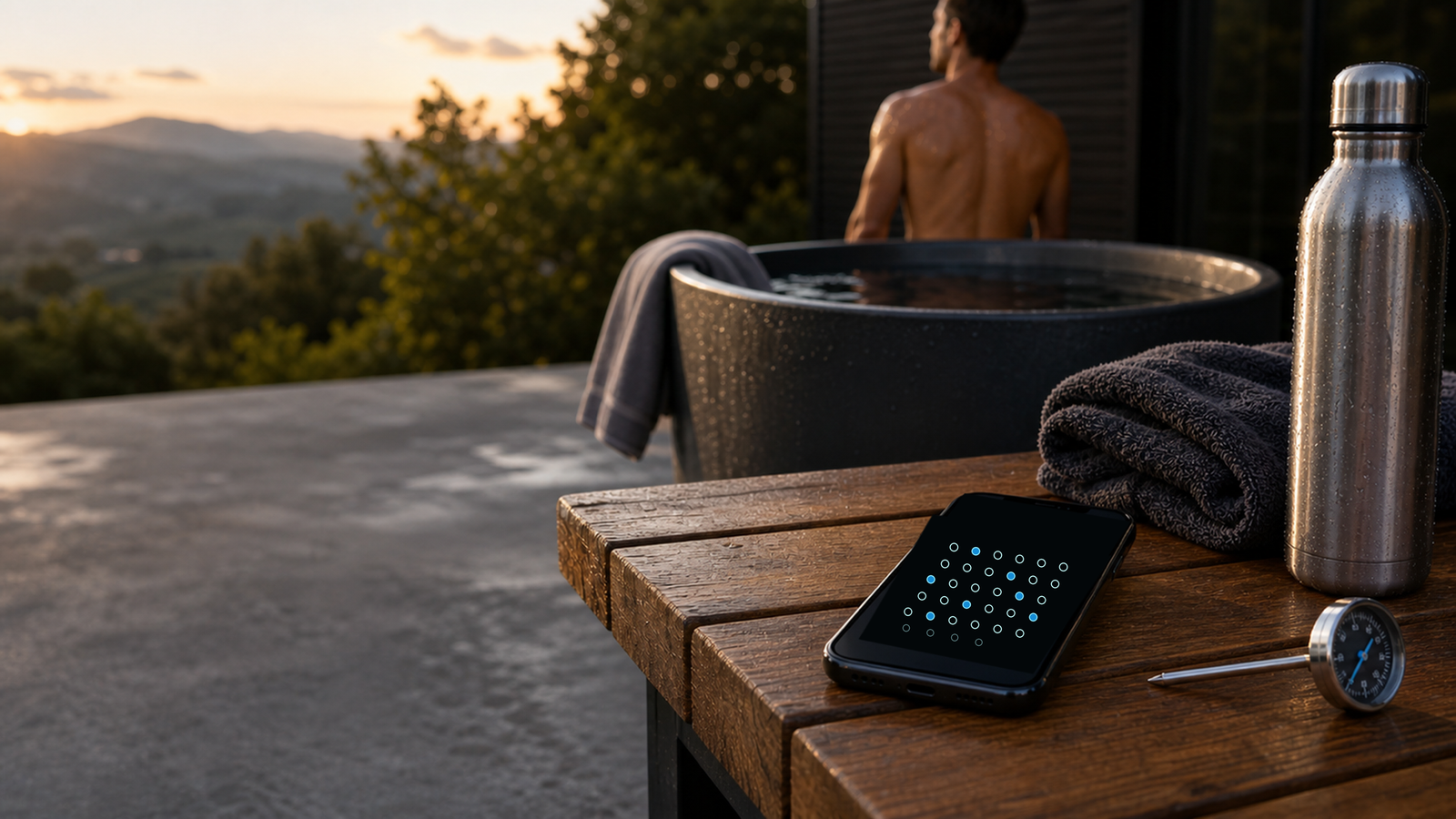
Used well, a streak is one piece of context. It shows repeated sessions over time. It works best when it sits beside the details that make each session meaningful: duration, water temperature, date, notes, and progress.
That is the useful distinction. A streak by itself can become a score. A streak inside a cold plunge log becomes a cleaner way to understand the routine without relying on memory.
What a cold plunge streak actually measures
A cold plunge streak measures repeated sessions over time.
That might mean sessions on consecutive days. It might mean a weekly rhythm. It might mean a certain number of sessions completed within a period. The exact definition matters less than the purpose: make consistency visible.
What a streak does not measure is just as important.
It does not tell you:
- how cold the water was
- how long each session lasted
- how controlled the session felt
- whether the setup changed
- whether the session was appropriate for you that day
This is why a cold plunge streak tracker should not stand alone. A five-session streak can include very different sessions. One might be a calm two-minute session at a moderate temperature. Another might be shorter, colder, or done on a high-stress day. Without the rest of the log, the streak hides those differences.
The streak tells you that the routine happened. The log tells you what actually happened.
Consistency is more useful than chasing longer sessions
Longer cold plunges are not automatically better. A longer timer result can look like progress, but duration without context is easy to misread.
For most people tracking a personal routine, consistency is the more useful signal. It shows whether cold plunges are actually becoming part of the week rather than an occasional event that is hard to compare.
That does not mean every missed day is a problem. It also does not mean daily cold plunges are necessary. A good streak tracker should help you see the pattern without turning the routine into pressure.
For example, these are different patterns:
| Pattern | What it may show |
|---|---|
| Three sessions this week | A repeatable weekly rhythm |
| One long session after a gap | A single event, not necessarily a routine |
| Two shorter sessions at colder water | More context needed before comparing |
| A missed week during travel | A schedule change, not a failure |
The point is not to force the highest streak number. The point is to see what is repeatable.
What streaks miss without duration and temperature
A streak becomes more useful when it is paired with duration and water temperature.
Duration tells you how long the session lasted. Temperature gives that duration context. Notes explain anything unusual about the session. Together, those details keep a streak from becoming too simple.
For example:
| Streak entry | Missing context | More useful log |
|---|---|---|
| Day 4 | No session detail | 2:00 at 55 F, morning session |
| Day 5 | No temperature | 1:30, colder than usual, after sauna |
| Day 6 | No notes | 2:15 at 54 F, felt controlled |
The streak tells you that sessions continued. The log explains how those sessions compared.
This matters for cold plunges and ice baths because the same duration can feel different depending on the water temperature, setup, timing, and how you are feeling that day. A streak does not capture those variables by itself.
If you care about cold plunge progress, track the streak as a consistency marker, not as the whole story.
Simple progress fields to track
A cold plunge log should be short enough to use after every session.
These fields are enough for most routines:
| Field | Why it matters |
|---|---|
| Duration | Shows how long each session lasted. |
| Water temperature | Gives context to the duration. |
| Date | Builds the streak and session history. |
| Notes | Captures setup, timing, and how controlled the session felt. |
| Streak or stats | Makes consistency visible over time. |
This is also where the app workflow matters. If timing, logging, and stats are separated across a stopwatch, notes app, and memory, the routine becomes harder to review. A focused cold plunge tracker keeps the basic record in one place.
The log does not need to be detailed. A useful note might be:
- after sauna
- morning session
- colder than usual
- short but controlled
- skipped yesterday due to travel
Short notes prevent the history from becoming vague. They also make stats easier to interpret later.
When to reset, pause, or ignore a streak
A mature streak system needs room for real life.
Reset the streak when the routine naturally stops and you want a clean record. That is simple and neutral. It does not need to carry judgment.
Pause the streak when the break is expected: travel, illness, schedule disruption, unusual stress, or a week where cold exposure does not make sense for you. A pause can be more accurate than pretending every missed day means the same thing.
Ignore the streak when chasing it would lead to poor judgment. This is the most important rule. A streak should never override common sense, health context, or safety.
The useful question is not "How do I keep the streak alive at all costs?"
The better question is: "Is this routine still controlled, repeatable, and appropriate today?"
That framing keeps streaks useful. It also keeps them in their proper place. They are a review tool, not a command.
How stats make the routine easier to review
Stats are useful when they summarize the routine without adding noise.
For cold plunges, useful stats can include:
- total sessions
- current streak
- recent consistency
- average duration
- recent water temperatures
- sessions by week or month
These numbers should help you review the pattern. They should not push you into chasing colder water, longer sessions, or daily completion.
Cold Plunge Timer & Log is designed around this kind of focused record: timer, logs, and stats in one iPhone app. The purpose is narrow: time the session, save the useful details, and make progress easier to review.
That focus matters because a cold plunge record does not need to become a general wellness dashboard. It needs to make the basics easy to save and easy to review.
A simple weekly review
If you want a practical way to use streaks, review the week instead of only looking at the current streak number.
Ask:
- How many sessions did I complete?
- What were the durations?
- What were the water temperatures?
- Did the sessions feel controlled?
- Did my schedule make the routine easier or harder?
This keeps the review grounded in useful details. It also avoids treating a missed day as the only thing that matters.
A weekly review is enough for many people. You do not need to analyze every session. You only need enough information to understand the routine.
Safety note
Cold exposure is not appropriate for everyone. This article is not medical advice, diagnosis, treatment, personalized safety guidance, or emergency support.
Cold water can stress breathing and the cardiovascular system, especially with sudden immersion, very cold temperatures, longer exposure, open water, existing medical conditions, or high cumulative stress. If you are unsure whether cold exposure is appropriate for you, speak with a qualified health professional.
Do not rely on an article, app, timer, streak, or tracking system during an emergency.
FAQ
What is a cold plunge streak tracker?
A cold plunge streak tracker records repeated sessions over time so you can see consistency across your routine.
Should I cold plunge every day to keep a streak?
Not necessarily. A streak should not override safety, recovery, schedule, health conditions, or common sense.
Is a longer cold plunge streak always better?
No. A longer streak only shows consistency. It does not show water temperature, session quality, or whether the routine is appropriate for you.
What should I track with a streak?
Track duration, water temperature, date, notes, and progress or stats over time.
Can I track ice bath streaks the same way?
Yes. Ice baths can use the same basic tracking fields: duration, water temperature, date, notes, and streaks.
References
These references are included for cold-water immersion context, protocol variables, and safety. They do not mean that maintaining a streak is medically beneficial.
- Cain T, Brinsley J, Bennett H, Nelson M, Maher C, Singh B. Effects of cold-water immersion on health and wellbeing: A systematic review and meta-analysis. PLOS ONE. 2025.
- Machado AF, Ferreira PH, Micheletti JK, de Almeida AC, Lemes IR, Vanderlei FM, et al. Can water temperature and immersion time influence the effect of cold water immersion on muscle soreness? Sports Medicine. 2016.
- Tipton M, Bradford C. Moving in extreme environments: open water swimming in cold and warm water. Extreme Physiology & Medicine. 2014.