
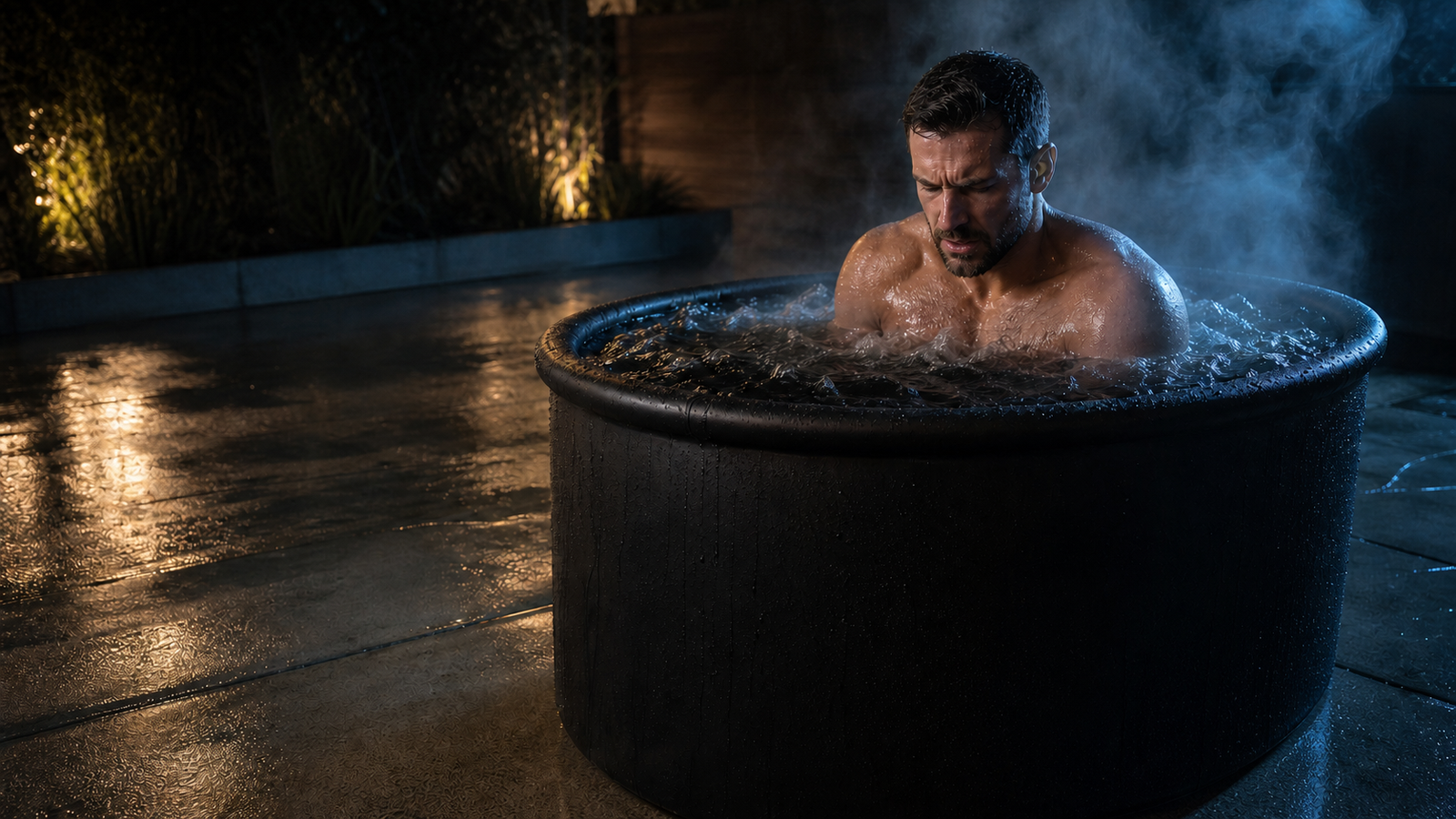
There is no single best answer to how often you should cold plunge. A practical starting point is to think in terms of repeatable sessions, not a perfect weekly number. For many beginners, one to three controlled sessions per week is easier to evaluate than jumping straight into daily cold plunges.
Frequency depends on the whole session: water temperature, duration, how experienced you are, how you recover afterward, and why you are using cold exposure in the first place.
This guide gives you a conservative way to think about cold plunge frequency, when daily cold plunges may be too much, and what to track if you want your routine to become more consistent over time.
Why the simple answer is not enough
A useful answer is not "cold plunge every day" or "cold plunge three times per week." A better answer is: choose a frequency you can repeat safely, then adjust based on temperature, duration, recovery, and how your body responds.
Cold water immersion research is not built around one universal protocol. Studies vary by temperature, session length, timing, participant type, and outcomes measured. A 2025 systematic review in PLOS One noted that cold-water immersion protocols differ across studies and the evidence base is still developing.
That matters for everyday users. The question is not only how often. It is how often at what temperature, for how long, and for what purpose.
A practical frequency framework
For beginners, consistency should matter more than intensity. A cold plunge routine is easier to understand when the sessions are short, controlled, and spaced out. Starting with one to three sessions per week gives you enough repetition to notice patterns without turning the routine into pressure.
For steady users, frequency can increase if the sessions stay controlled and recovery feels normal. Some people prefer a few sessions per week. Others like shorter, more frequent sessions.
For advanced users, daily cold plunges may be part of a routine, but daily exposure should still be evaluated honestly.
Temperature changes the frequency question
Temperature and frequency belong together. The colder the water, the more cautious the weekly plan should be.
Moderately cold water may be easier to repeat than very cold water. A beginner-friendly range, such as roughly 50-59 F / 10-15 C, can still feel cold while leaving room to learn how your breathing, comfort, and recovery respond. Colder water, such as 45-49 F / 7-9 C, can make the same duration feel much more intense.
Below 45 F / 7 C, a session becomes more advanced for most casual users. Frequency should not be copied from someone else's routine.
If you lower the temperature, consider reducing duration or frequency. If you increase frequency, keep the temperature and duration more conservative. Do not change everything at once. For more context, read Cold Plunge Temperature and Time.
Duration changes the frequency question too
A short cold plunge and a long cold plunge are different stresses. If you cold plunge often, shorter sessions may be easier to evaluate. If you cold plunge less often, you still do not need to make each session extreme.
This is where a cold plunge timer becomes practical. Without tracking duration, it is easy to remember the routine as "about the same" when the actual sessions are changing.
If you want to build frequency, keep duration simple at first. Repeat a manageable session, track it, and then decide whether it should stay the same, become slightly more frequent, or become easier. For duration context, see How Long Should You Stay in a Cold Plunge?
Recovery goal vs habit goal
Cold plunges are used for different reasons. Frequency should match the reason.
If your goal is post-workout or post-match recovery, cold exposure may be more situational. It may make more sense after hard sessions, competitions, travel, or weeks where turnaround time is the main issue.
If your goal is a regular reset ritual, the routine may be more about consistency. A predictable schedule can be useful, but the sessions should still remain controlled.
If your goal is tracking progress, frequency becomes data. You can compare how often you cold plunge, what temperatures you use, how long sessions last, and what your notes show.
A beginner-friendly approach
For a beginner, a simple plan is better than a complicated protocol.
One practical starting point is:
- begin with one to three sessions per week
- keep the water temperature moderate rather than extreme
- keep the duration short and repeatable
- leave rest days between sessions at first
- write a short note after each session
- adjust only one variable at a time
This is not a medical prescription. It is a conservative way to learn your own response. If one session per week feels like enough, that is a valid starting point.
Daily cold plunges are not required for a useful routine. A lower-frequency habit that you can maintain safely is more useful than a daily streak that feels forced.
What to track
If you cold plunge regularly, track enough to understand the pattern.
Useful fields include:
- date and time
- session duration
- water temperature
- frequency for the week
- short notes
- how controlled the session felt
- whether the session followed exercise, sport, sauna, or normal routine
- sleep or recovery notes when relevant
- streaks, if they help motivation without adding pressure
Cold Plunge Timer & Log is built around this kind of simple record: timer, saved logs, water temperature, notes, stats, and streaks. It does not tell you what frequency is medically right for you. It helps you see what you actually did. For more on consistency, read Cold Plunge Streak Tracker.
Common mistakes
The first mistake is copying someone else's weekly routine. A person who cold plunges daily may have a different setup, experience level, health context, and water temperature.
The second mistake is changing too many variables at once. If you make the water colder, stay in longer, and increase weekly frequency at the same time, it becomes hard to know what affected the session.
The third mistake is treating streaks as the goal. A streak can be useful if it reflects consistency. It becomes less useful if it encourages you to ignore fatigue, stress, poor sleep, or safety concerns.
The fourth mistake is using frequency to compensate for unclear goals. Recovery, habit, temperature tolerance, and sport routines may all lead to different schedules.
The fifth mistake is ignoring warning signs. Feeling unusually lightheaded, panicked, numb, confused, or unwell is not something to push through.
Safety note
Cold exposure is not appropriate for everyone. This article is not medical advice, diagnosis, treatment, personalized safety guidance, or emergency support.
Cold water can stress breathing and the cardiovascular system, especially with sudden immersion, very cold temperatures, longer exposure, open water, existing medical conditions, or high cumulative stress. If you are unsure whether cold exposure is appropriate for you, speak with a qualified health professional.
Do not rely on an article, app, timer, or tracking system during an emergency.
FAQ
How often should you cold plunge as a beginner?
Many beginners are better off starting with one to three controlled sessions per week rather than jumping into daily cold plunges. Keep water temperature and duration conservative while you learn how your body responds.
Is it okay to cold plunge every day?
Daily cold plunges may be part of some routines, but they are not required. Daily exposure should still be evaluated against temperature, duration, recovery, sleep, training load, and your own health situation.
How often should you ice bath after workouts?
It depends on the workout and your goal. Cold water may be more situational after hard sessions, competitions, or short recovery windows. It does not need to follow every workout automatically.
Should I track cold plunge frequency?
Yes, if you want to understand your routine over time. Tracking frequency alongside duration, water temperature, and notes is more useful than tracking streaks alone.
Is more frequent cold plunging better?
Not necessarily. More frequent cold plunges are not automatically better. A useful routine is repeatable, controlled, and appropriate for your goal and safety context.
References
- Cain MK, Brinsley J, Bennett H, Nelson M, Maher C, Singh B. The effects of cold-water immersion on health outcomes: An umbrella review. PLOS One. 2025.
- Mayo Clinic Press. The science behind ice baths for recovery.