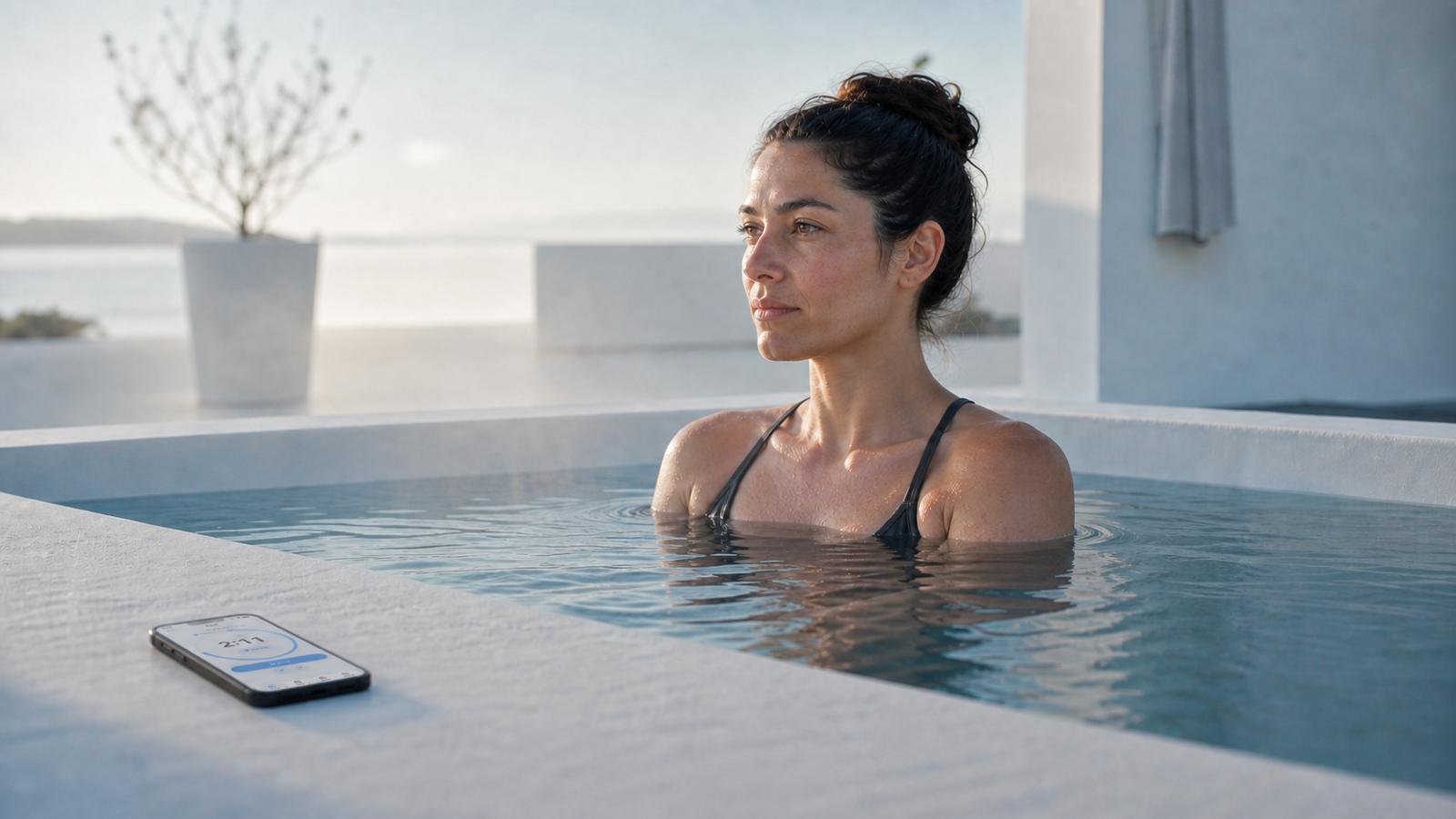
A stopwatch can measure one session. A cold plunge log helps you understand the pattern across many sessions.
That difference matters because cold plunges are not only about one timer result. A two-minute plunge can feel very different depending on the water temperature, the time of day, whether it follows a workout or sauna, and how consistent you have been that week. When those details are scattered across memory, screenshots, notes, and generic timers, it becomes harder to see what is actually happening in your routine.
This guide explains what to track, why each field matters, and how to keep your cold plunge tracking simple enough to use consistently.
Why a stopwatch is not enough
A stopwatch answers one question: how long was this session?
That is useful, but it is incomplete. Cold plunge tracking usually needs a little more context. For example, three minutes at one water temperature may not feel the same as three minutes at another. A session after a sauna may feel different from a morning session before work. A session during a busy, low-sleep week may feel different from one after a rest day.
None of that means every cold plunge has to become a spreadsheet. The point is the opposite: a good cold plunge tracker should keep the useful details in one place so you do not have to overthink it.
The most useful pattern is simple:
- Start the timer.
- Log the water temperature.
- Save a quick note if something is worth remembering.
- Review progress over time.
This gives you a cleaner history than a stopwatch, a notes app, or a calendar reminder can provide on their own.
What to track after each cold plunge
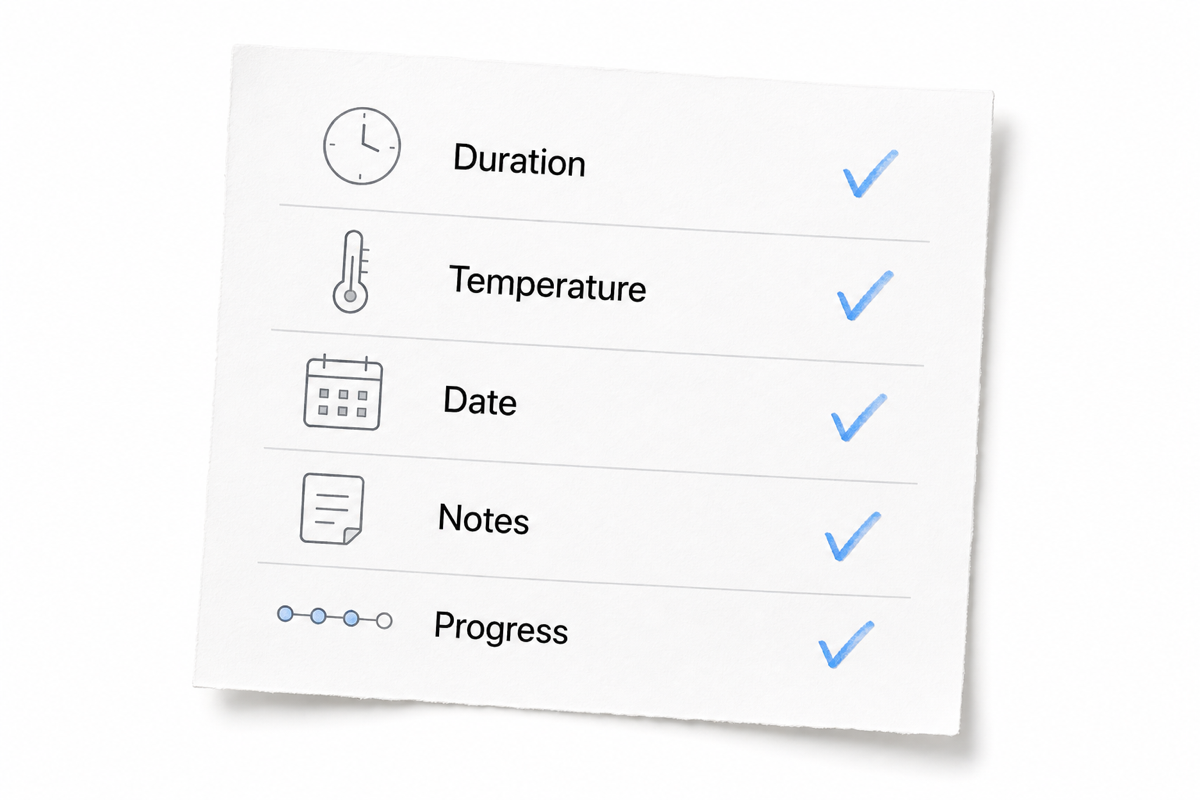
The best cold plunge log is short enough that you will actually use it. These are the fields worth tracking first.
Duration
Duration is the most obvious field, and it is still the foundation of the session. A cold plunge timer should record the session length clearly so you can compare one session with the next.
For beginners, duration is especially useful because it shows gradual progress without needing complicated measurements. If you are building from short sessions, seeing consistent entries over time can be more useful than trying to remember how long each plunge lasted.
Water temperature
Cold plunge temperature gives context to duration. Without temperature, a session log is missing one of the most important pieces of information.
The same duration can represent a very different experience at different temperatures. Cold-water immersion research often records water temperature, immersion time, and exposure conditions carefully. For personal tracking, you do not need lab-level precision, but recording the water temperature helps make your history more meaningful.
If your setup does not have an exact reading every time, an approximate temperature is still better than no context at all.
Date and time
The date makes the log useful as a history. The time of day adds another layer of context.
Some people cold plunge in the morning. Others do it after training, after sauna, or as part of a weekend routine. Tracking when each session happens can help you notice which routine is easiest to repeat.
This is also where streaks become useful. A streak should not turn cold plunging into pressure, but it can make consistency visible.
Notes
Notes should be short. A useful note might be:
- after workout
- after sauna
- first morning session
- felt colder than usual
- slept poorly
- outdoor plunge
The goal is not to journal every detail. The goal is to capture anything that might explain why a session felt different.
Progress and streaks
Progress is easier to understand when it is visible. A cold plunge progress tracker can show total sessions, recent consistency, streaks, and changes in duration or temperature over time.
This is where a dedicated cold plunge tracker becomes more useful than a basic stopwatch. You are not only measuring the current session. You are building a calm record of the habit.
A simple beginner tracking template
If you are starting from scratch, use a minimal template like this:
| Field | Example |
|---|---|
| Duration | 2:30 |
| Water temperature | 12 C / 54 F |
| Date | Monday morning |
| Notes | After workout, felt calm afterward |
| Streak | 3 sessions this week |
This is enough for most people. You can always add more detail later, but the first version of your tracking system should be easy to repeat.
The most common mistake is tracking too much too soon. If the log takes longer than the session, you probably will not keep using it.
Why temperature and duration belong together
Cold plunge duration and cold plunge temperature should be read together.
Duration tells you how long you stayed in. Temperature tells you what kind of exposure that duration represents. Notes tell you what was happening around the session. Together, those three fields create a better picture than any one of them alone.
This is also why broad cold plunge advice can be hard to apply. Research on cold-water immersion often varies by water temperature, immersion depth, duration, frequency, and timing. Those differences do not mean personal tracking has to be complicated. They simply show why context matters.
For a personal routine, the practical takeaway is simple: log the basics consistently before drawing conclusions.
How Cold Plunge Timer & Log fits this workflow
Cold Plunge Timer & Log is designed around the same simple pattern: time the session, log the water temperature, save the result, and review progress over time.
The app is built for people who want a focused cold plunge timer instead of a generic stopwatch. It is also meant to keep the log lightweight: duration, temperature, session history, progress, and streaks.
The privacy direction is simple as well. The app is designed to work without an account, without ads, and without advertising tracking. Cold plunge data is intended to stay local-first, so the tracking experience stays focused on the routine instead of turning into another noisy wellness dashboard.
Safety note
Cold exposure is not appropriate for everyone. This article is not medical advice, diagnosis, treatment, personalized safety guidance, or emergency support.
Cold water can be stressful on the body, especially with sudden immersion, very cold temperatures, longer exposure, open water, existing medical conditions, or high cumulative stress. If you are unsure whether cold exposure is appropriate for you, speak with a qualified health professional.
Do not rely on an app, timer, article, or tracking system during an emergency.
FAQ
What should I track after a cold plunge?
Track the session duration, water temperature, date, notes, and progress over time. These fields give you a useful cold plunge log without making the routine complicated.
Is a stopwatch enough for cold plunges?
A stopwatch is enough to time one session, but it does not create a useful history. A cold plunge tracker helps you save duration, temperature, notes, progress, and streaks in one place.
Why should I log water temperature?
Water temperature gives context to duration. The same time in the water can feel different depending on the temperature, setup, and timing of the session.
Can I track ice baths and cold showers too?
Yes. The same basic fields can work for an ice bath tracker or a cold shower tracker: duration, temperature if available, date, notes, and progress.
Is Cold Plunge Timer & Log medical advice?
No. Cold Plunge Timer & Log is a personal utility for timing and logging sessions. It is not medical advice, diagnosis, treatment, personalized safety guidance, or emergency support.
References
- Cain T, Brinsley J, Bennett H, Nelson M, Maher C, Singh B. Effects of cold-water immersion on health and wellbeing: A systematic review and meta-analysis. PLOS ONE. 2025.
- Machado AF, Ferreira PH, Micheletti JK, de Almeida AC, Lemes IR, Vanderlei FM, et al. Can water temperature and immersion time influence the effect of cold water immersion on muscle soreness? Sports Medicine. 2016.
- Tipton M, Bradford C. Moving in extreme environments: open water swimming in cold and warm water. Extreme Physiology & Medicine. 2014.